Latest Post
Showing posts with label Product Launch. Show all posts

Friday, August 28, 2026

Galaxy S26 FE, GTA 6 Gameplay, and AI Standards

DeviceRank News Digest featured image
Featured image from a source covered in this digest.

Digest Highlights

  • Samsung is dropping regional processor splits for the Galaxy S26 FE, opting for the Exynos 2500 globally.
  • Anthropic launched a Model Hardware Standard to help AI agents control scientific and physical instruments.
  • Grand Theft Auto VI introduces realistic vehicle theft mechanics, requiring tools for locked cars.

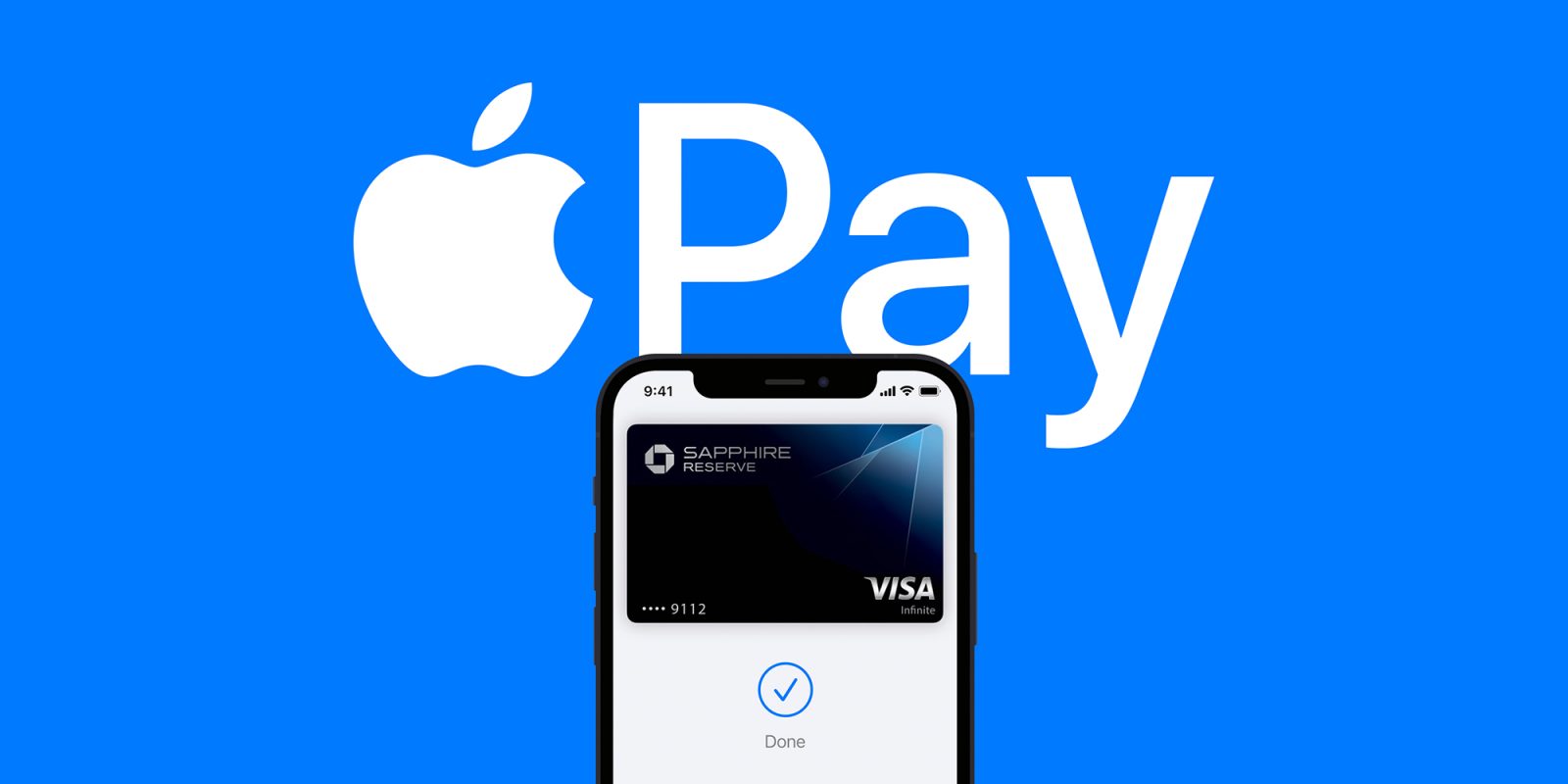
1. Apple Pay is getting even better with four new features and more

9to5Mac · 2026-08-27T23:34:07+00:00

Apple announced four new features for Apple Pay alongside a major regional expansion. The updates aim to refine the checkout process for iPhone users shopping in physical stores, online, and within apps. While specific technical details of the four features remain under wraps, the rollout represents Apple's latest push to consolidate its mobile wallet dominance. The expansion brings these new transaction capabilities to a wider global audience, streamlining how users authenticate and complete payments.

Why it matters: iPhone users get a more versatile digital wallet, while merchants must prepare for updated integration standards to support these new checkout options.

2. The biggest video game of all time looks like a movie

The Verge · 2026-08-27T23:20:00+00:00

Rockstar Games debuted an extended, 27-minute preview of Grand Theft Auto VI on Netflix rather than launching it directly on free platforms like YouTube. **According to analysis by The Verge**, this preview styled itself as a prestige crime drama rather than a traditional video game trailer. The cinematic approach highlights Rockstar's focus on high-fidelity storytelling, treating the upcoming release as a major entertainment event. By leveraging Netflix's platform, Rockstar reached a captive audience of streaming subscribers, signaling a shift in how major video games are marketed to the public.

Why it matters: This partnership signals a convergence of gaming and streaming media, changing how publishers build hype for highly anticipated releases.

3. Anthropic and OpenAI are joining the AI stage at TechCrunch Disrupt 2026

TechCrunch · 2026-08-27T23:16:45+00:00

TechCrunch Disrupt 2026 will feature prominent industry leaders from Anthropic and OpenAI on its AI Stage in San Francisco from October 13 to 15. Presented by Google for Startups, the sessions will tackle the commercial realities of artificial intelligence. Key topics include pricing AI products when foundational models face commoditization, securing autonomous agents from the infrastructure layer up, and establishing go-to-market strategies. **Per TechCrunch's event announcement**, the stage aims to move past basic hype to address the structural security gaps and new job categories emerging from enterprise AI deployment.

Why it matters: Founders and developers get direct insights into pricing strategies and security protocols needed to build sustainable, AI-native businesses.

4. Samsung Galaxy S26 FE uses the Exynos 2500 chipset everywhere

GSMArena · 2026-08-27T23:11:02+00:00

Samsung officially announced the Galaxy S26 FE, powered exclusively by the Exynos 2500 chipset worldwide. Unlike previous releases, which split markets between Qualcomm Snapdragon and proprietary Exynos chips, this launch features no regional hardware division. **According to GSMArena's technical breakdown**, the Exynos 2500 replaces the Exynos 2400 used in the Galaxy S25 FE. The new processor offers architectural improvements designed to boost overall performance and thermal efficiency across all global models.

Why it matters: Buyers no longer have to worry about regional performance disparities, though the Exynos-only strategy puts Samsung's custom silicon performance under intense scrutiny.

5. OpenAI renews push to get Apple’s trade secret theft lawsuit tossed

9to5Mac · 2026-08-27T23:08:40+00:00

OpenAI, along with co-defendants Chang Liu, Tang Tan, and io Products, filed a new petition to dismiss Apple's trade secret misappropriation lawsuit. The defendants are asking the court to dismiss the complaint with prejudice, which would permanently block Apple from refiling the same claims. **Reported by 9to5Mac**, the legal battle centers on allegations of trade secret theft involving former Apple employees who transitioned to the AI firm. This petition represents a concerted push by OpenAI to resolve the costly intellectual property dispute before it reaches a full trial.

Why it matters: The outcome will set a legal precedent for how tech talent and proprietary designs transition between consumer hardware giants and AI startups.

6. Bluesky has a new setting to help you avoid accidentally going viral

Engadget · 2026-08-27T22:36:24+00:00

Bluesky launched a new account-level privacy setting designed to help users avoid unwanted viral attention. The toggle allows users to request that the platform hide their posts from the algorithmic Discover feed, which is the primary driver of non-follower engagement. **As detailed by Engadget**, the setting does not make accounts entirely private, as Bluesky's open AT Protocol does not support fully locked profiles. However, it prevents posts from being pushed to strangers via default algorithms, offering a tool to mitigate sudden, overwhelming public exposure.

Why it matters: Users gain greater control over their digital footprint on open social networks without needing to completely lock down their profiles.

7. Anthropic's new hardware standard lets AI agents control the physical world

Ars Technica · 2026-08-27T22:15:43+00:00

Anthropic introduced a research preview of its Model Hardware Standard, a set of standardized drivers designed to let AI agents control physical devices. The initiative aims to simplify how automated software interfaces with scientific instruments and hardware components. **According to Anthropic's technical release**, the standard provides a common communication layer, eliminating the need for custom, bespoke translation software. This system could reduce the time required to configure complex laboratory experiments from weeks to minutes by allowing devices to communicate directly across a network.

Why it matters: This standard moves AI agents out of purely digital environments, paving the way for automated physical labs and smart hardware integration.

8. You won't be able to hot-wire every car in GTA 6

Engadget · 2026-08-27T22:01:02+00:00

Stealing vehicles in Grand Theft Auto VI will feature new mechanical layers based on the make and model of the car. **According to an IGN preview published by Engadget**, players can no longer automatically hot-wire every vehicle by pressing a single button. Instead, high-end or locked vehicles will remain inaccessible until players progress through the story and acquire specialized tools. Players can still carjack occupied vehicles directly, but parked cars will require strategic planning, adding a progression loop to the game's core driving mechanics.

Why it matters: Players must adapt to more realistic gameplay systems, turning vehicle acquisition into a tactical decision rather than an automatic action.

Source outlets:
  • 9to5Mac — Apple Pay is getting even better with four new features and more
  • The Verge — The biggest video game of all time looks like a movie
  • TechCrunch — Anthropic and OpenAI are joining the AI stage at TechCrunch Disrupt 2026
  • GSMArena — Samsung Galaxy S26 FE uses the Exynos 2500 chipset everywhere
  • 9to5Mac — OpenAI renews push to get Apple’s trade secret theft lawsuit tossed
  • Engadget — Bluesky has a new setting to help you avoid accidentally going viral
  • Ars Technica — Anthropic's new hardware standard lets AI agents control the physical world
  • Engadget — You won't be able to hot-wire every car in GTA 6
Read more ...

Thursday, August 27, 2026

Weekly Tech Digest: Samsung S26 FE, OpenAI Ads, and Meta Lawsuit

DeviceRank News Digest featured image
Featured image from a source covered in this digest.

Digest Highlights

  • Samsung's new Galaxy S26 FE leans heavily on software features and the Exynos 2500 chip rather than major hardware overhauls.
  • OpenAI is introducing advertising to its free and low-priced Go subscription tiers in India to monetize its massive user base.
  • Meta settled an $18 billion lawsuit by agreeing to implement strict, unprecedented safety protections for teenagers on Instagram.

1. ChatGPT Searches Individual Subreddits By Name via @sejournal, @suganthan

Search Engine Journal · 2026-08-27T12:00:30+00:00

A technical breakdown **published by Search Engine Journal** reveals that ChatGPT now queries specific subreddits by name during search operations. Analysis of live traffic logs showed the AI assistant generating targeted search paths, such as querying a single subreddit directly, rather than searching the entire reddit.com domain. In one tracked conversation, ChatGPT retrieved 71 total results, with 48 originating from the targeted community. This targeted retrieval resulted in Reddit threads securing 68% of the total results and the vast majority of the visible citations in the final answer. However, this behavior remains highly query-dependent. In testing conducted just four days prior, a similar commercial query yielded 84 retrieved threads but displayed zero citations, showing how volatile AI source attribution remains.

Why it matters: For publishers and marketers, this shift shows that ChatGPT search visibility is highly concentrated within specific online communities rather than broad domains, making niche community engagement more critical than general SEO.

2. The Samsung Galaxy S26 FE arrives with a new chipset and a host of One UI 9 features

GSMArena · 2026-08-27T12:00:02+00:00

According to **GSMArena**, Samsung launched the Galaxy S26 FE with a heavy focus on One UI 9 software features and day-to-day AI utility. While hardware changes are minimal, the most notable upgrade is the inclusion of the Exynos 2500 processor. Built on a 3nm fabrication process, this chip was previously exclusive to the Galaxy Z Flip7. Interestingly, Samsung avoided highlighting the specific chipset during the official announcement. The transition to the Exynos 2500 represents a direct generational jump over the Exynos 2400 chip used in the preceding Galaxy S25 FE. The strategy indicates Samsung is prioritizing software optimization and internal chip manufacturing efficiencies to keep production costs down while delivering modern software features.

Why it matters: Buyers get flagship-level 3nm processing power and the latest software capabilities without paying full flagship prices, though physical hardware changes remain sparse.

3. What is Android System Intelligence and what happens if you turn it off?

Engadget · 2026-08-27T12:00:00+00:00

A detailed guide from **Engadget** explains the role of Android System Intelligence (ASI), a background system component responsible for running contextual features on Android devices. On Google Pixel phones, ASI powers daily utilities like Live Caption, Now Playing, Smart Autorotate, Screen Attention, and predictive notification actions. To protect user privacy, ASI runs locally inside Android's Private Compute Core, which isolates machine-learning features from direct network access. When cloud updates are necessary, Private Compute Services acts as a secure bridge. While users can disable ASI, doing so breaks these automated features. Google collects diagnostic logs and device identifiers through this service, though users can opt out of usage and diagnostic data collection in their settings.

Why it matters: Understanding ASI helps users make informed decisions about privacy trade-offs, allowing them to balance automated convenience against background data collection.

4. The Samsung Galaxy S26 FE looks like a perfectly cromulent budget flagship

Engadget · 2026-08-27T12:00:00+00:00

Reported by **Engadget**, the Samsung Galaxy S26 FE continues the company's tradition of offering a bridge between mid-range and premium tiers. Priced starting at $700, the device shares its physical footprint with the S26+ but features specifications closer to the mid-range A57. It comes equipped with a 6.7-inch OLED display running at a 120Hz refresh rate, peaking at 1,900 nits of brightness. The rear camera array includes a 12-megapixel main sensor, a 50-megapixel ultra-wide lens, and an 8-megapixel telephoto lens with 3x optical zoom. Under the hood, the device pairs the Exynos 2500 processor with 8GB of RAM and up to 256GB of storage. Additionally, Samsung guarantees seven years of software support and includes a 4,900mAh battery supporting 45W wired charging.

Why it matters: The $700 price point offers a large display and long-term software support, but the 8GB of RAM may limit heavy multitasking and future system performance.

5. Samsung’s Galaxy S26 FE pairs last year’s hardware with last month’s software

The Verge · 2026-08-27T12:00:00+00:00

An analysis by **The Verge** points out that the Galaxy S26 FE represents a highly conservative release for Samsung. The hardware remains largely unchanged from the Galaxy S25 FE launched a year prior. Instead of introducing physical design or sensor updates, Samsung relied on software features that had already debuted on its flagship devices earlier in the year. This approach makes the Fan Edition line feel increasingly familiar and iterative. By recycling existing physical components and porting over existing software tricks, Samsung appears to be focusing on maximizing profit margins on its mid-range lineup rather than pushing technological boundaries or offering unique hardware incentives to upgrade.

Why it matters: Consumers upgrading from very old phones will find value, but current S25 FE owners have virtually no incentive to upgrade given the lack of physical hardware innovation.

6. Sleep score court is in session

The Verge · 2026-08-27T12:00:00+00:00

A review from **The Verge** highlights user frustration with the automated sleep tracking scores provided by the Google Pixel Watch. Through a creative legal narrative, the critique highlights the rigid nature of wearable fitness algorithms. Users find that the watch fails to account for external factors, such as camping trips or environmental disruptions, when calculating sleep quality. For instance, a night spent sleeping outdoors resulted in a low score of 71 out of 100, despite the user's best efforts. While the Pixel Watch offers useful baseline insights like suggesting earlier bedtimes, the software's inability to adjust for extenuating circumstances shows the current limitations of consumer health tracking metrics.

Why it matters: It highlights the need for wearable manufacturers to build more contextual flexibility into health algorithms, rather than relying on rigid, one-size-fits-all scoring systems.

7. Unprecedented teen protections on Instagram see $18B lawsuit settled

9to5Mac · 2026-08-27T11:51:51+00:00

According to a report by **9to5Mac**, Meta has settled an $18 billion lawsuit brought by several US states. The lawsuit accused the social media giant of intentionally designing Instagram to be addictive to teenagers. Under the terms of the settlement, the financial payout will be directed toward funding youth safety initiatives and educational programs. Crucially, Meta has committed to implementing unprecedented technical protections designed to prevent overuse and limit screen time for teenage users on its platforms. While the financial settlement includes specific stipulations on how the funds are distributed, the forced implementation of systemic platform-level safety guardrails represents a major shift in how regulatory bodies hold social media companies accountable.

Why it matters: This settlement forces Meta to prioritize user safety over engagement metrics, potentially setting a legal precedent that changes how all social media apps design their algorithms for minors.

8. OpenAI to start showing ads on ChatGPT’s free and Go tiers in India

TechCrunch · 2026-08-27T11:35:59+00:00

Per a disclosure reported by **TechCrunch**, OpenAI will begin displaying advertisements to users on its ChatGPT Free and Go subscription tiers in India. The decision follows a recent update to OpenAI's terms of service that paved the way for ad integration. India represents a massive market for the company, boasting over 100 million weekly active users, most of whom utilize the free tier or the affordable Go subscription. OpenAI is launching the ad initiative with 50 brands, partnering with major advertising agencies WPP and Omnicom. Additionally, OpenAI plans to launch a dedicated ad manager next month, allowing businesses to run campaigns with a minimum daily budget of 725 rupees, or roughly 7.60 dollars, targeting users during high-context search moments.

Why it matters: Free users will have to tolerate ads in their conversational flows, signaling a major shift in how AI platforms plan to monetize their massive operational costs globally.

Source outlets:
  • Search Engine Journal — ChatGPT Searches Individual Subreddits By Name via @sejournal, @suganthan
  • GSMArena — The Samsung Galaxy S26 FE arrives with a new chipset and a host of One UI 9 features
  • Engadget — What is Android System Intelligence and what happens if you turn it off?
  • Engadget — The Samsung Galaxy S26 FE looks like a perfectly cromulent budget flagship
  • The Verge — Samsung’s Galaxy S26 FE pairs last year’s hardware with last month’s software
  • The Verge — Sleep score court is in session
  • 9to5Mac — Unprecedented teen protections on Instagram see $18B lawsuit settled
  • TechCrunch — OpenAI to start showing ads on ChatGPT’s free and Go tiers in India
Read more ...
© Copyright 2014-17
| Designed By
| Powered By Blogger | Subscribe Us | Report Abuse | Sitemap
DMCA.com Protection Status